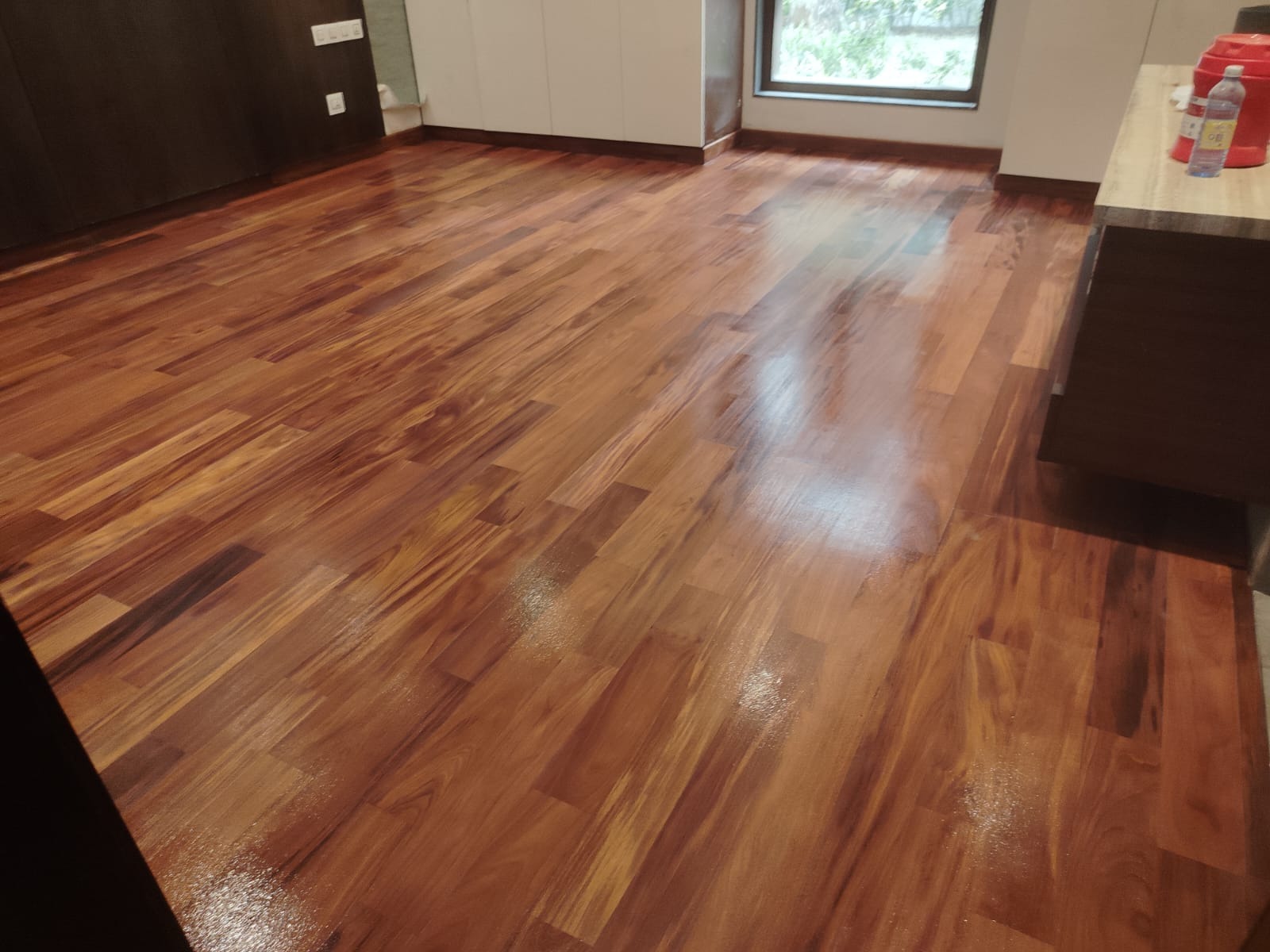
Solid wood has served as a foundational flooring material for centuries. Traditionally, these floors consisted of solid timber cut to specific dimensions, air-dried, and secured directly with nails or screws before being sanded and oiled on-site.
As manufacturing evolved, the process became significantly more refined. Modern solid wood planks feature precision tongue-and-groove profiling and are kiln-dried, a method that substantially improves the timber's structural stability.
Today, these advanced techniques are paired with superior factory-applied lacquers, delivering a highly resilient, ready-to-install surface.
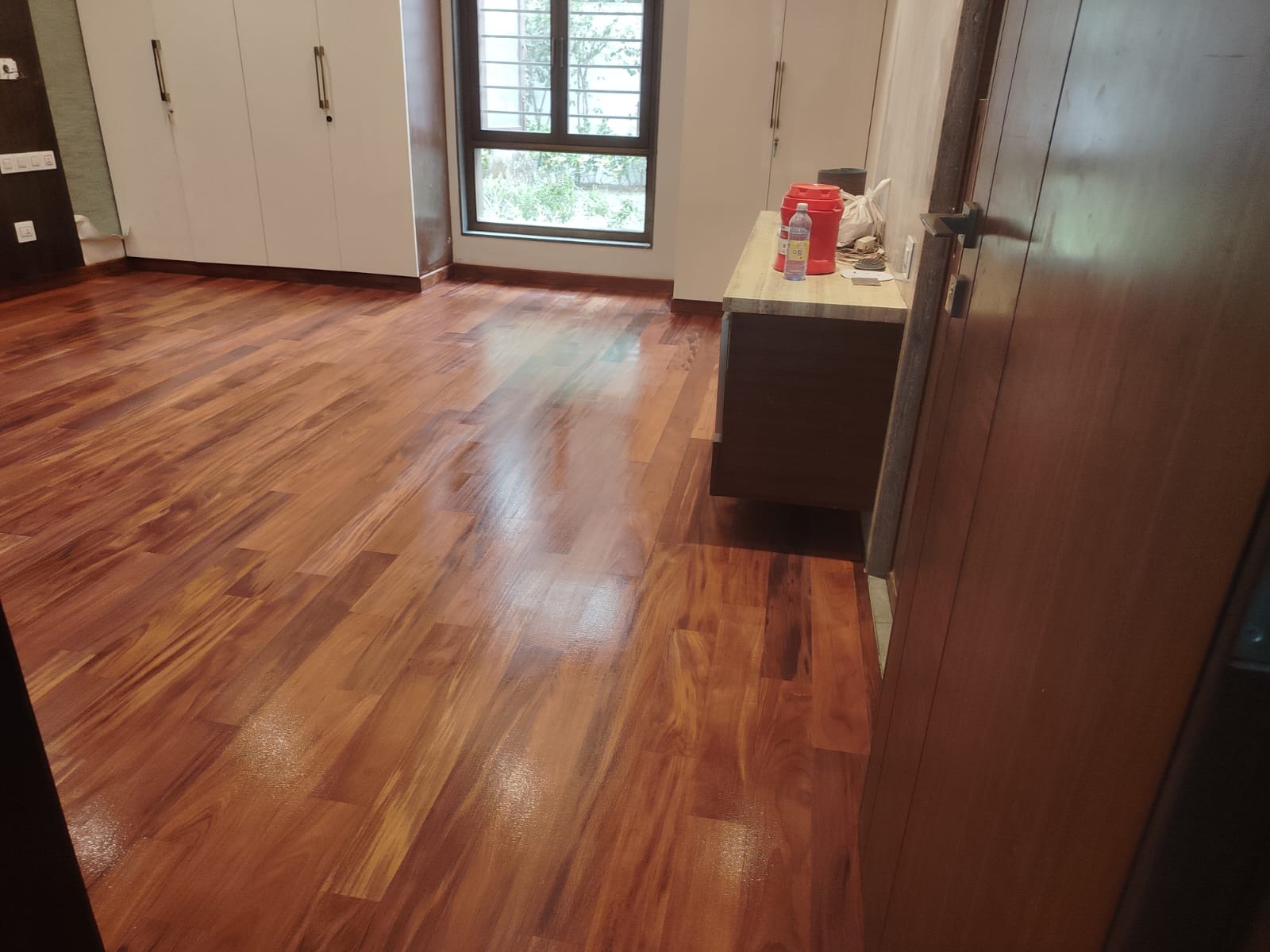
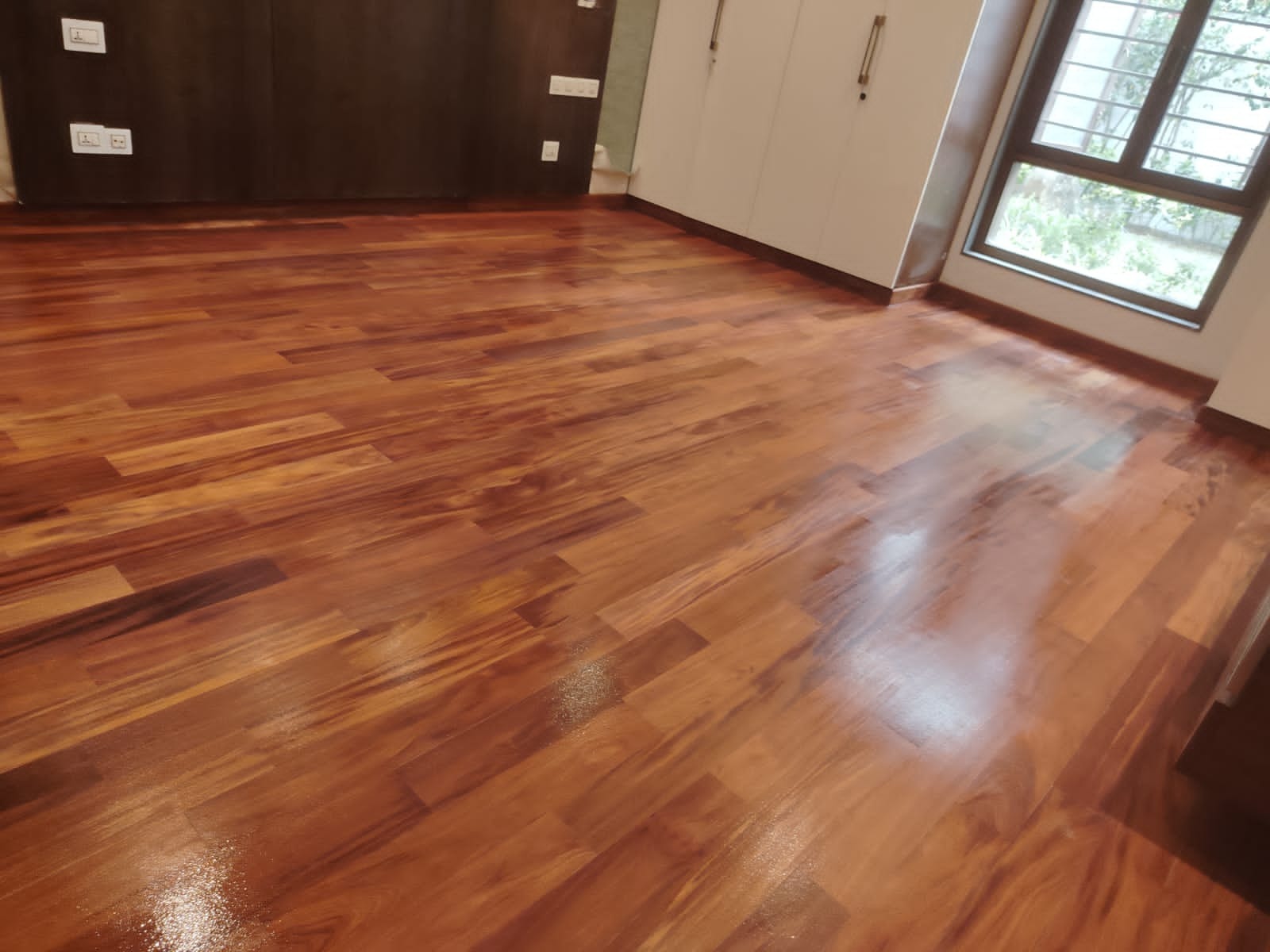
Because flooring must endure continuous impact and daily wear, solid wood planks are exclusively milled from high-density hardwoods rather than softwoods. Selecting a dimensionally stable wood species is essential for a lasting installation.
Materials such as Oak, Maple, Teak, Jatoba, Merbau, Ipe, and Walnut are highly preferred. Each of these species offers a unique aesthetic appearance and the necessary structural integrity to perform reliably in demanding flooring applications.
A completely natural, homogeneous single-layer product with unparalleled authenticity.
Acts as an organic insulator, remaining comfortably warm in winter and temperate in summer.
Highly appealing to the touch, offering a rich visual presence that synthetic options cannot replicate.
Built to endure years of foot traffic, developing character and structural grace over time.
While the organic nature of solid wood is highly sought after, it possesses inherent characteristics that require careful planning. As a natural material, the timber will continuously expand and contract in response to atmospheric changes in the room. Additionally, despite being hardwood, the surface is susceptible to indentations from dropped objects or stiletto heels.
Solid wood represents a premium investment. Once the protective lacquer wears off, the re-sanding and re-polishing process is required. Installation also demands a plywood or reaper sub-base—as direct glue-down methods are avoided in India. This sub-base adds significant height to the floor, which must be carefully accounted for during renovations.